


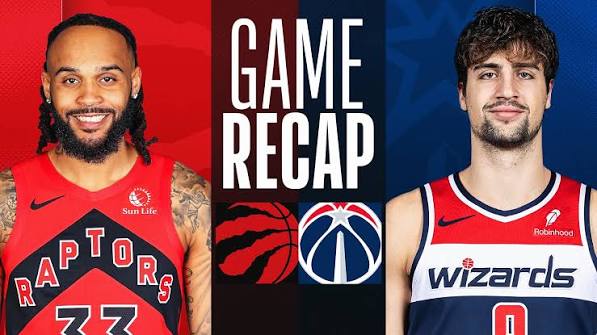
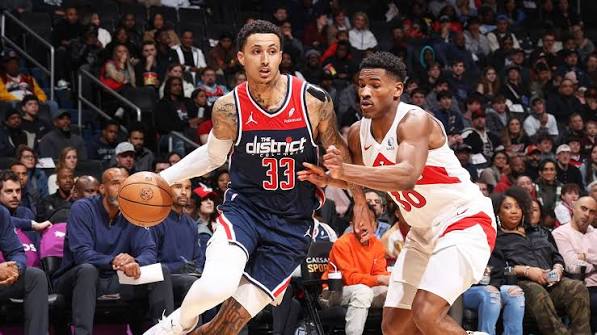
The latest meeting between the Toronto Raptors and Washington Wizards produced a high-scoring battle at Capital One Arena. Toronto won 134-125 on February 28, 2026, after controlling the second half.
The game featured several strong individual performances. Immanuel Quickley led Toronto with 27 points and 11 assists. Brandon Ingram added 24 points, while RJ Barrett scored 21. Scottie Barnes and Jakob Poeltl each finished with 18 points.
Washington received 19 points from Will Riley. Bilal Coulibaly and Kyshawn George each scored 14 points. The Wizards also received a huge contribution from their bench, which outscored Toronto’s reserves 64-26.
Game Snapshot: Score, Date and Venue
| Category | Details |
|---|---|
| Match | Toronto Raptors vs Washington Wizards |
| Date | February 28, 2026 |
| Venue | Capital One Arena |
| Final Score | Raptors 134, Wizards 125 |
| Winning Team | Toronto Raptors |
| Top Scorer | Immanuel Quickley, 27 points |
| Top Assists | Immanuel Quickley, 11 assists |
| Attendance | 17,429 |
Toronto entered the fourth quarter with a six-point advantage. The Raptors then extended their lead and closed the game without allowing Washington to regain control.
The Players Who Shaped the Game
Immanuel Quickley Sets the Tone
Quickley delivered the most complete individual performance. He played 37 minutes and 10 seconds, scoring 27 points on 10-of-15 shooting.
He also made two three-pointers. His free-throw shooting was perfect at 5-for-5.
The bigger number was his playmaking. Quickley finished with 11 assists, giving Toronto a reliable offensive creator throughout the game.
His performance helped Toronto keep its offense moving. Washington struggled to slow down the Raptors’ interior attack, while Quickley repeatedly created scoring opportunities.
Brandon Ingram Adds Efficient Scoring
Brandon Ingram gave Toronto another major offensive weapon.
He scored 24 points in 33:41. Ingram shot 9-of-14 from the field, good for 64.3 percent.
He also added five rebounds and five assists. His combination of scoring and passing helped Toronto maintain pressure on Washington’s defense.
RJ Barrett and Scottie Barnes Stay Productive
RJ Barrett finished with 21 points, five rebounds, and three assists. He shot 8-of-15 from the field.
Scottie Barnes added 18 points, four rebounds, and four assists. Barnes also recorded a steal and a block.
Their production gave Toronto five starters who reached at least 18 points. That balance became one of the game’s defining features.
Jakob Poeltl Controls the Interior
Poeltl delivered an efficient performance around the basket.
He scored 18 points on 7-of-7 shooting. He also grabbed 10 rebounds, including three offensive boards.
His defensive numbers included three steals and one block. Poeltl’s inside presence helped Toronto attack the paint instead of depending entirely on outside shooting.
Washington Wizards Player Stats
Washington produced several useful individual numbers despite losing the game.
| Wizards Player | Points | Rebounds | Assists | FG |
|---|---|---|---|---|
| Will Riley | 19 | — | — | — |
| Bilal Coulibaly | 14 | — | — | — |
| Kyshawn George | 14 | — | — | — |
| Justin Champagnie | — | — | — | — |
| Other Wizards | — | — | — | — |
The official game report lists Riley as Washington’s leading scorer with 19 points. Coulibaly and George each added 14.
Washington’s bench scoring was particularly impressive. The Wizards produced 64 bench points, compared with just 26 from Toronto’s reserves.
That number shows why the final margin did not fully reflect Washington’s contribution from its second unit.
The Wizards also connected on 16 of 34 three-point attempts. That works out to 47.1 percent from beyond the arc.
However, Toronto found a different path to efficient offense.
Team Statistics Tell the Bigger Story
The final score alone does not explain this matchup.
Toronto scored 134 points. Washington scored 125. The nine-point difference came from several areas of the box score.
Toronto scored 68 points in the paint. Washington managed 56.
That 12-point interior advantage mattered. The Raptors repeatedly generated close-range opportunities and converted them efficiently.
Toronto also committed only nine turnovers. Washington had 13.
The Raptors finished with 31 assists, showing strong ball movement. Washington recorded fewer assists while relying heavily on individual scoring and three-point shooting.
Toronto shot 60 percent from the field. That efficiency was one of the clearest statistical differences.
The Raptors made 51 of 85 field-goal attempts. They also converted nine of 22 three-point attempts and 23 of 27 free throws.
How the Game Changed After Halftime
Washington started well.
The Wizards led 33-25 after the first quarter. Toronto then responded with a 36-point second quarter.
At halftime, the Raptors had reduced the deficit to one point. The momentum changed again after the break.
Toronto scored 37 points in the third quarter.
Washington managed 28.
That nine-point swing gave Toronto a 98-92 advantage entering the final period. The Raptors then scored 36 more points in the fourth quarter.
Washington answered with 33.
The Wizards remained competitive. Yet Toronto’s second-half offensive consistency proved decisive.
Key Numbers From the Box Score
Several statistics stand out when reviewing the Washington Wizards vs Toronto Raptors match player stats.
- Quickley’s 27 points — Toronto’s highest individual total.
- Quickley’s 11 assists — The game’s biggest playmaking number.
- Ingram’s 24 points — Efficient scoring on 9-of-14 shooting.
- Poeltl’s 10 rebounds — Toronto’s only double-digit rebound performance.
- Riley’s 19 points — Washington’s leading scorer.
- 64 bench points — Washington’s major statistical advantage.
- 68 paint points — Toronto’s strongest offensive edge.
- 31 assists — Toronto’s total team assists.
- 16-of-34 threes — Washington’s outside shooting output.
- 134 points — Toronto’s final offensive total.
What the Match Reveals About Both Teams
Toronto’s victory came from balanced scoring and efficient shooting.
Five Raptors starters reached at least 18 points. That prevented Washington from focusing its defense on one scorer.
Quickley controlled the backcourt. Ingram supplied efficient perimeter scoring. Barnes added all-around production. Barrett attacked from the wing. Poeltl created an interior presence.
Washington’s story was different.
The Wizards received significant bench production. They also shot well from three-point range.
Still, Toronto’s offense was more efficient overall. The Raptors shot 60 percent from the field and scored 68 points inside the paint.
The game also highlighted the value of second-half adjustments. Washington held a first-quarter lead. Toronto responded by increasing its scoring output in the next three quarters.
Final Takeaways From the Match
- Quickley delivered: 27 points and 11 assists powered Toronto.
- Toronto shared scoring: Five starters reached 18 points.
- Washington’s bench responded: Reserves produced 64 points.
- Paint scoring mattered: Toronto generated 68 points inside.
- Efficiency decided it: Toronto shot 60 percent overall.
- Second-half control: Toronto turned a narrow halftime gap into a nine-point win.
The next scheduled meeting between the teams is October 23, 2026, at Capital One Arena in Washington. NBA listings also show additional 2026-27 meetings later in November and December.
Disclaimer: This article uses publicly available NBA game records, official box-score data, and published game reports for informational and educational purposes. Player statistics and team information reflect the specified game and should not be treated as a broader assessment of a player’s entire season or career.
Read more:The Story Behind Jones MyGreenBucks Net